How We Work

Two pathways. One mission.

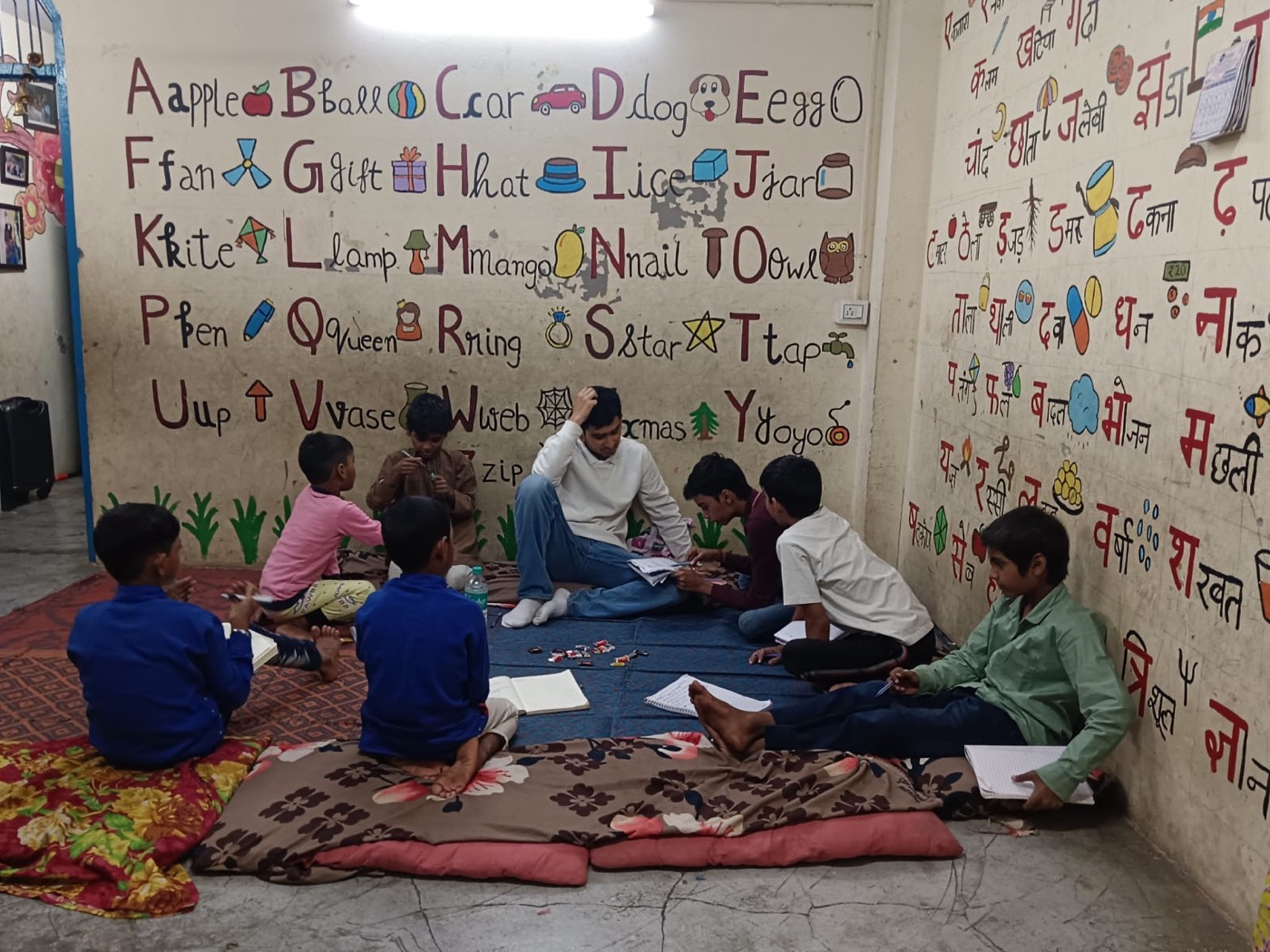
Children sitting on mats in a small group, learning in front of a hand-painted English and Hindi alphabet wall

Foundational Learning

Many of our students have had their education interrupted and are learning below their grade level.

We start by assessing each student's level, then provide targeted support in:

  • Hindi
  • English
  • Mathematics

Students are grouped by current ability rather than age or grade. Our volunteer educators run regular classes aligned with NCERT learning objectives, helping students build strong foundations and keep up with their schoolwork.

Critical Thinking Curriculum

Alongside foundational learning, our critical thinking curriculum helps students observe, reflect, communicate, and lead. It follows the six-step learning framework described below.

Students take part in:

  • Observation exercises
  • Group discussions
  • Storytelling
  • Reading and writing
  • Public speaking
  • Team projects
  • Leadership and problem-solving
  • Community awareness
  • Compassion building

Our Learning Framework

Observe → Reflect → Express → Create → Reason → Lead

  1. 1

    Observe

    Students learn to notice details around them and become more aware of the world.

  2. 2

    Reflect

    Students think about their experiences, feelings, and observations.

  3. 3

    Express

    Students share their ideas through speaking, writing, and discussion.

  4. 4

    Create

    Students develop their own stories and original ideas.

  5. 5

    Reason

    Students compare perspectives, spot patterns, and think critically.

  6. 6

    Lead

    Students apply what they learn to real-life situations and challenges in their communities.

A Glimpse Into Our Classroom

What learning looks like

Observation Activities

Students describe something they noticed during their day and explain why it stood out to them.

Storytelling Through Images

Students study an image, pick out its details, and build an original story from what they see.

Reading and Reimagining

Students read a story and write their own ending, building comprehension, creativity, and writing skills.

Listening and Discussion

Students learn to listen carefully, understand different perspectives, and disagree respectfully.

Building Compassion

Students interview a classmate: what makes them happiest, what hurts them, and what they dream of, and why. Then they think about how to ease the difficulties faced by people around them.

Debating

Students argue for and against topics close to their lives, such as "Schools should not give homework" or "Villages are better than cities," then expand each point into five sentences.

Solving Community Problems

Students pick a problem in their village, like broken roads, blocked drains, or mosquitoes spreading dengue, and ask: What is it? Why does it happen? Who suffers? How can it be fixed? Then they write to the village pradhan.

Fact or Opinion?

Students learn to tell facts ("Faizabad district is now called Ayodhya") from opinions ("Government schools are better than private schools"), and to support each opinion with reasons.

Flight of Dreams

In Sapnon ki Udaan (सपनों की उड़ान), students share what they want to become, why it matters to them, and what they are doing today to get there.
Our Delivery Model

Great mentors, wherever children are

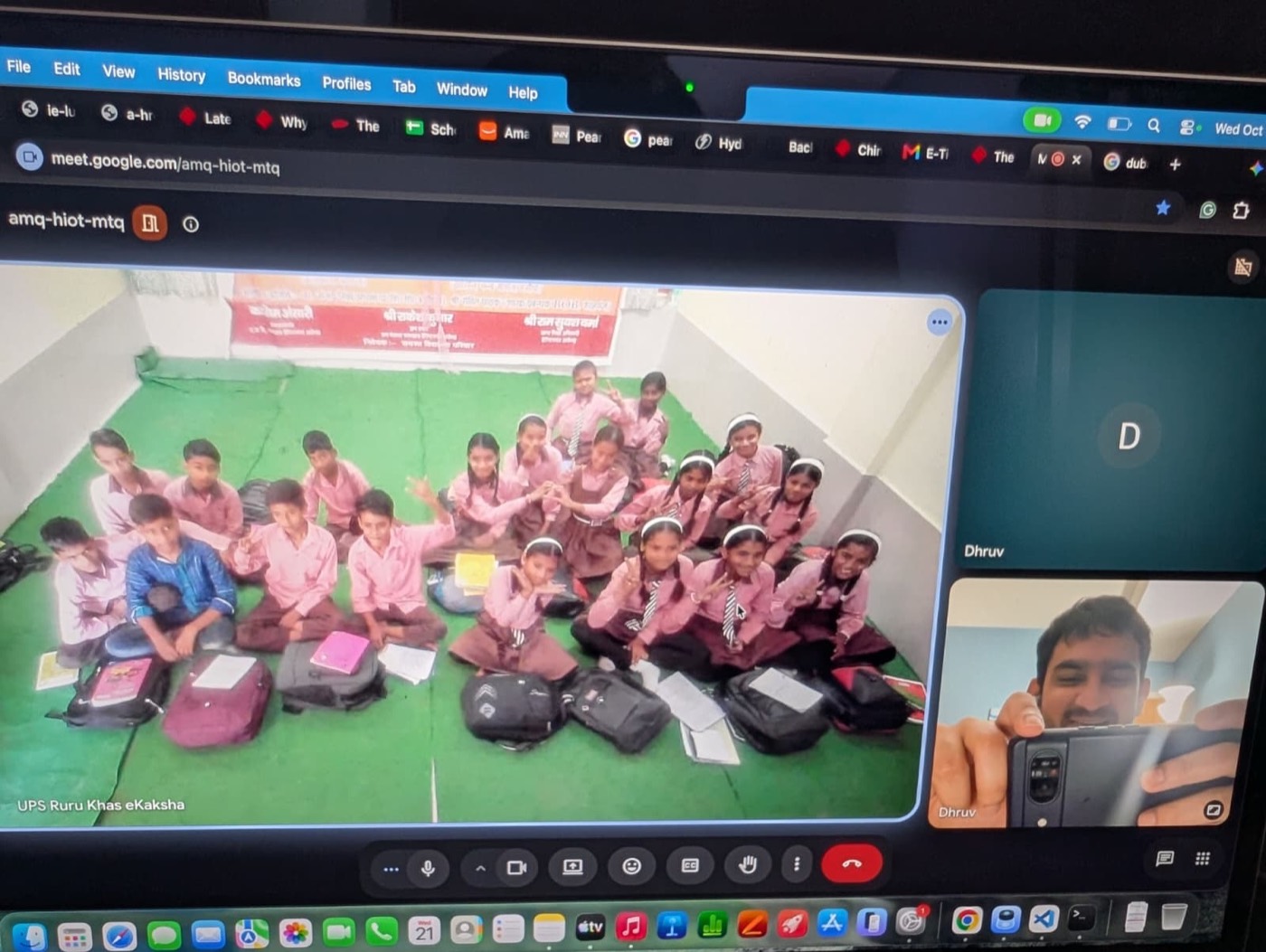
An on-ground teacher at each partner site, supported by digital infrastructure, connects students with volunteer educators who teach live, interactive sessions.

  1. Partner School or NGO
  2. On-Ground Teacher
  3. Digital Infrastructure
  4. Volunteer Educators
  5. Interactive Learning
  6. Confident, Curious Learners
A laptop showing a virtual class: a classroom of students seated on the floor, with a volunteer educator joining by video
A virtual session in progress: a volunteer educator teaching a full classroom online.